Two people searching "Irving Park, Greensboro" this week could pull up numbers that look like they belong to different cities. One sees an asking-price median near $635,000. The other sees a closed-sale median under $460,000, for a neighborhood with the same name, the same zip code family, and streets that are a five-minute drive apart. Neither number is wrong. That's what makes it worth explaining before you tour a single house.
The confusion isn't a data error. It's a naming problem that happens to sit on top of a real economic one.
One Name, Two Neighborhoods
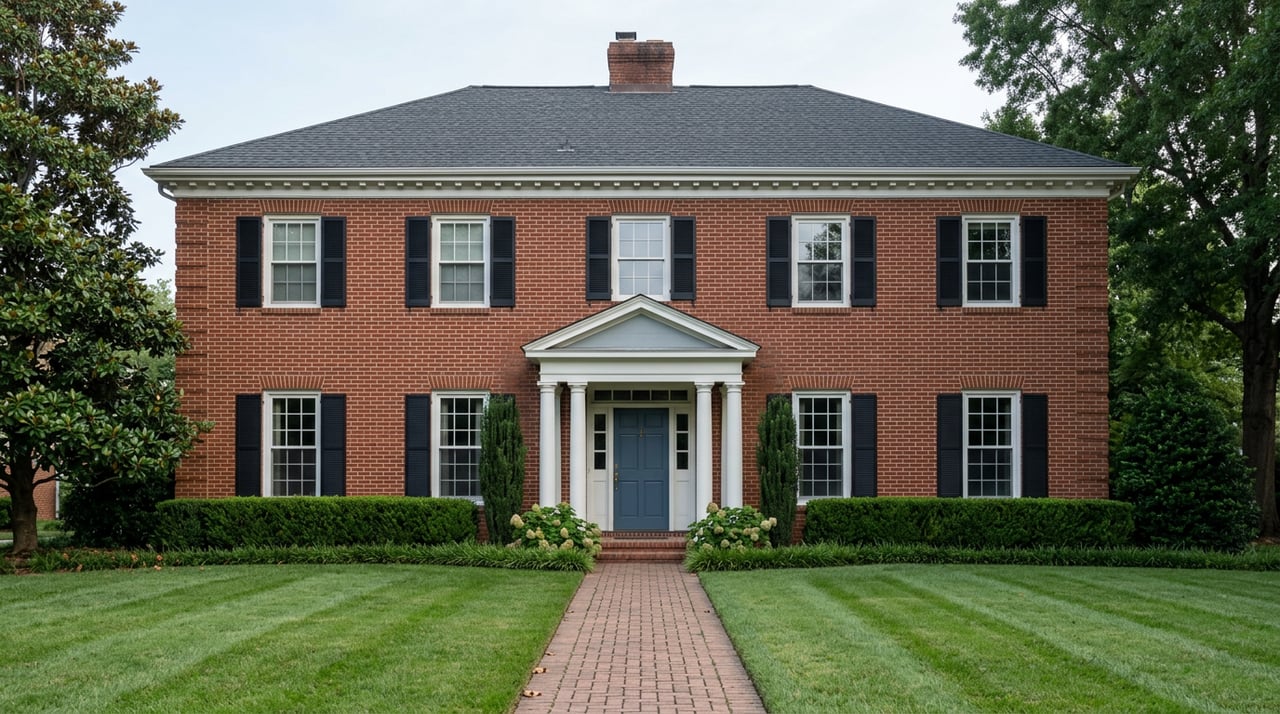
"Irving Park" was platted starting in 1914, when landscape architect John Nolen drew the original plan and Robert Cridland expanded it around 1920, wrapping curving streets around what became the Greensboro Country Club's Donald Ross-designed golf course at 410 Sunset Drive. That original section, now generally called Old Irving Park, saw its finest construction through the 1910s, 1920s, and 1930s. Its historic core, 164 contributing buildings in all, was documented for National Register of Historic Places listing in a nomination prepared in April 1994 as the Irving Park Historic District.
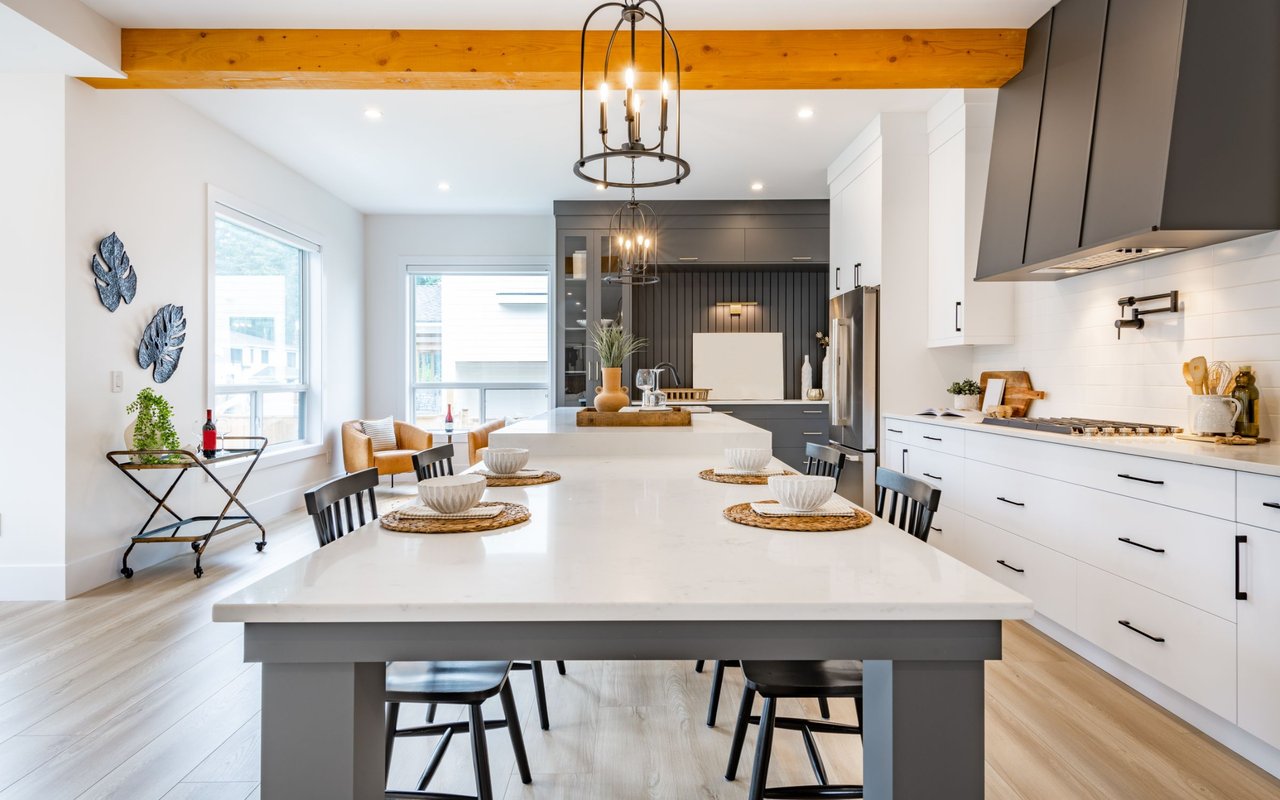
New Irving Park is a different generation entirely. It filled in mostly during the 1950s and 60s, as Greensboro's postwar suburban wave pushed north. The streets are wider because they were built for the car, not the carriage. Garages are attached and built for two vehicles as standard, with three-car garages considered unusual for the era. The architecture leans Colonial Revival, Georgian, French country, and Federal, with nine-foot ceilings and traditional room layouts rather than open floor plans.
So when a portal reports "the Irving Park median," it's often blending a 1920s Georgian two blocks from a Donald Ross fairway with a 1962 Colonial Revival on a wide cul-de-sac three-quarters of a mile away. That's not a rounding error. It's two different products getting one label.
The Gap Between Asking and Sold Is the Real Story
Here's the number that actually explains the confusion, and it's the one worth sitting with if you're comparing these two pockets.
As of August 2026, Old Irving Park homes were listed for a median asking price of $635,000, working out to $239 per square foot, with a median of 78 days on market. But look at what's actually closing. Homes.com's trailing twelve-month figure puts the median closed sale at $458,900, up 16 percent year over year, with homes spending a median of 34 days on market once they're priced to move. Redfin's independent read, current as of June 2026, lands almost exactly there too: a median sale price of $458,840, up 10.4 percent year over year.
Run the math and Old Irving Park is asking roughly 28 percent above what's actually closing.
New Irving Park tells a much calmer story. Homes.com shows a current median asking price of $585,000 against a trailing twelve-month closed-sale average of $557,283, up 3 percent year over year, with homes averaging 43 days on market. That's a gap of about 5 percent, not 28.
| Old Irving Park | New Irving Park | |
|---|---|---|
| Housing stock era | 1911 to 1930s | 1950s to 1960s |
| Asking price (current) | $635K | $585K |
| Closed-sale median (trailing 12 mo.) | $458,900 to $458,840 | $557,283 |
| Ask-to-sold gap | ~28% | ~5% |
| Days on market | 34 to 78 | 43 |
A five-times-wider gap between what sellers are asking and what buyers are actually paying isn't noise. It's a signal that Old Irving Park's inventory is bimodal: a handful of fully renovated showcase properties chasing top-dollar buyers, sitting alongside unrenovated or teardown-candidate lots that ultimately trade closer to land value. New Irving Park's housing stock, built in one uniform wave, doesn't have that split, so its asking and closing numbers stay close together.
Why Old Irving Park's Spread Runs So Wide
That bimodal pattern isn't theoretical. Greensboro watched it play out in real time in 2024, when the Spencer Love House, a 1936 Colonial Revival brick mansion built for textile executive Spencer Love and designed by architect William Holleyman, was demolished despite sitting inside a National Register historic district. Preservation Greensboro's own account of the loss called it a lesson that "National Register status alone is not enough to protect a historic building from the landfill." Neighbors who watched the demolition were blunt about what it cost the street.
"A home like this is rare and to lose it, it's just heartbreaking, and it affects our whole city."
That's a resident quoted by WFMY News2 at the time. The practical takeaway for a buyer isn't sentimental. It's that a "historic" listing in Old Irving Park doesn't automatically come with the protections the National Register designation implies. Some of what's for sale is priced as architecture. Some of it is priced as a buildable lot with an old house standing on it. Redfin's own filter for vintage inventory in Old Irving Park currently shows just seven historic homes listed at a median of $454,000, drawing an average of eleven offers each within 36 days, proof that the renovated, protected end of the market still moves fast when it's priced right. The wide gap in the overall median comes from everything sitting below that tier.
Why New Irving Park's Edges Are Starting to Move
New Irving Park's tighter spread reflects a market that's still mostly homogeneous, but that's starting to change at its boundary. In 2025, Greensboro's city council voted 6 to 2 to approve a rezoning at 1201 Pisgah Church Road, at the entrance to the neighborhood, clearing the way for developer BJ Johnson of Metamorph Investments to build eight luxury townhomes on the site, over the objections of nearby residents, as FOX8 reported.
That single approval doesn't move a median on its own. But it's the kind of infill pressure that Old Irving Park, fully built out and largely locked into single-family zoning around its historic core, doesn't face in the same way. New Irving Park's detached-home supply has stayed tight and uniform for seventy years. If attached product starts filling gaps at the edges, the range of what "New Irving Park" means on a portal search could start to widen the way Old Irving Park's already has.
For now, the neighborhood's identity is still carried by the amenities that have anchored it since the 1960s: the Sherwood Swim and Racquet Club, with eleven clay tennis courts, three of them indoor, an Olympic-sized pool, and a tennis academy, plus Carolina Laurel Park's playground near the neighborhood's center. Old Irving Park's anchor points sit closer to the golf course itself, along with Latham Park, Johnson Park, and the Golden Gate Shopping Center a short drive away. Both neighborhoods sit near Buffalo Lake, which functions more as a scenic backdrop than a place residents actually swim or boat.
What This Means If You're Comparing the Two
If you're cross-shopping these neighborhoods, the median on any single site is a starting point, not a conclusion. A few things worth doing before you anchor to a number:
- Ask your agent to filter recent closed sales by construction era, not just by neighborhood name, since a 1920s and a 1962 build in the same zip code aren't comparable stock.
- If a listing in Old Irving Park looks underpriced for the neighborhood, find out whether it's being marketed on land value rather than the structure. That distinction changes what a fair offer looks like.
- Watch New Irving Park's boundary streets for further rezoning activity, since the Pisgah Church Road approval suggests the city is open to attached product there going forward.
- Compare days on market alongside price, not instead of it. A historic home in Old Irving Park selling in 34 days at $458,900 is a very different market signal than one sitting at $635,000 for 78 days.
A Few Common Questions
Is Old Irving Park the same thing as the Irving Park Historic District? Mostly. The National Register district, nominated in 1994, covers 164 contributing buildings concentrated in what's generally called Old Irving Park, built out around the Greensboro Country Club's golf course between 1911 and the 1930s.
Why do days on market differ so much between the two sections? Old Irving Park's inventory spans fully renovated historic showcases and unrenovated or teardown-candidate properties, which sell on very different timelines and to very different buyers. New Irving Park's more uniform 1950s and 60s stock moves through the market more evenly.
Does either neighborhood offer lake access? Both sit near Buffalo Lake, but it functions as a visual amenity rather than a recreational one. Neither section markets it as a swimming or boating feature.
Numbers on a portal can only tell you so much about a market this specific. If you're comparing Old and New Irving Park, or trying to figure out where your budget actually lands once you account for vintage, condition, and what's really closing versus what's asking, Colleen Long has spent two decades watching these two neighborhoods trade. Let's Connect. Request your free home valuation and get a comp set built around the sub-market you're actually buying into, not just the name on the map.