If you love old houses, you already know the appeal goes beyond square footage. It is the front porch details, the original millwork, the tree-lined streets, and the feeling that a home has a story to tell. If you are searching in Greensboro, it helps to know that “historic” can mean different things depending on the neighborhood and the type of designation. This guide walks you through the Greensboro neighborhoods that stand out for historic-home buyers and what to consider before you buy. Let’s dive in.
What “historic” means in Greensboro
In Greensboro, historic status is not one single label. Some homes are simply older and architecturally notable, some are in National Register historic districts, and some are in locally regulated historic districts.
That difference matters when you are shopping. According to the City of Greensboro, National Register listing by itself does not place restrictions on private property. It mainly supports preservation recognition, possible rehabilitation incentives, and federal review when a federally funded or licensed action is involved.
Local historic districts work differently. In Greensboro’s local historic districts, exterior changes and site work require a Certificate of Appropriateness, and the Historic Preservation Commission reviews larger projects like additions, new construction, and major alterations.
Greensboro currently has three local historic districts: Fisher Park, College Hill, and Dunleath. For many buyers, the simplest way to think about it is this: historic in Greensboro exists on a spectrum, and your best fit depends on how much historic character you want and how comfortable you are with exterior design review.
Fisher Park for classic historic character
Fisher Park is one of Greensboro’s strongest options if you want a neighborhood with a clear historic identity and local preservation oversight. The city describes it as Greensboro’s first suburb, centered around Fisher Park, which it identifies as the city’s first public park.
The local historic district period of significance is 1891 to 1930, while the National Register district period is 1889 to 1941. City materials describe the neighborhood’s housing mix as Prairie School, Craftsman, and Colonial Revival.
For buyers, that often translates into a close-in neighborhood with a dense concentration of older homes and a strong sense of place. If you picture mature blocks, notable architecture, and a park-centered setting near downtown, Fisher Park may be the first neighborhood to explore.
Why buyers like Fisher Park
Fisher Park tends to appeal to buyers who want historic details front and center. The architecture, the setting, and the local district rules all support a more preservation-focused experience.
It can be a smart fit if you value:
- A neighborhood with a well-defined historic period
- Older architectural styles such as Craftsman, Prairie School, and Colonial Revival
- Proximity to downtown Greensboro
- The structure and predictability of local design review for exterior changes
Irving Park for landscaped elegance
Irving Park offers a different historic-home experience. It is a National Register historic district listed in 1995, with architectural styles identified as Tudor Revival, Classical Revival, and Colonial Revival.
The district’s periods of significance are 1900 to 1924 and 1925 to 1949. City coverage describes Irving Park as a neighborhood known for 20th-century architecture, garden landscapes, and tree-lined streets.
Irving Park is often associated with a planned suburban layout and larger lots. Earlier sections featured high-style houses designed by prominent local architects, while later sections added smaller traditional forms and ranch houses.
What stands out in Irving Park
If you are drawn to historic homes but want a more formal landscape setting, Irving Park may stand out. Its appeal is not just the houses themselves, but also the layout and setting around them.
You may prefer Irving Park if you want:
- Architecturally distinctive homes
- Larger landscaped lots
- A planned neighborhood feel
- A broader mix of early and mid-20th-century houses
Because Irving Park is a National Register district rather than a local historic district, buyers should remember that National Register status alone does not create the same private-property exterior review rules that apply in Greensboro’s local historic districts.
Sunset Hills for variety and flexibility
Sunset Hills is another National Register historic district, but it offers a wider age and style range than many buyers expect. The city says the district includes more than 900 buildings and was one of Greensboro’s first examples of early suburban development.
Platted by developer A.K. Moore in 1926, Sunset Hills has a period of significance from 1925 to 1965. The city notes that it is Greensboro’s first National Register district to recognize post World War II residential architecture.
That makes Sunset Hills especially useful for buyers who love older neighborhood character but do not want to limit themselves to one early architectural era. The styles highlighted by the city include Colonial Revival, Tudor Revival, Craftsman Bungalow, Minimal Traditional, and Ranch.
Why Sunset Hills appeals to many buyers
Sunset Hills offers historic interest with more variety in home size, age, and style. City planning material notes that the neighborhood includes larger houses along West Market, Madison, and Greenway, along with smaller one-and-a-half-story Tudor and Colonial Revival homes.
This neighborhood may be a strong fit if you want:
- Historic character with a broader timeline
- A mix of revival-era and mid-century homes
- An established neighborhood feel with many homes to choose from
- More flexibility in the kind of historic property you pursue
How these Greensboro neighborhoods compare
If you are trying to narrow your search, this quick comparison can help.
| Neighborhood | Historic Status | Noted Styles | Best Fit For |
|---|---|---|---|
| Fisher Park | Local historic district and National Register district | Prairie School, Craftsman, Colonial Revival | Buyers who want strong historic character and local review for exterior work |
| Irving Park | National Register historic district | Tudor Revival, Classical Revival, Colonial Revival | Buyers who want architect-designed homes, larger lots, and formal landscapes |
| Sunset Hills | National Register historic district | Colonial Revival, Tudor Revival, Craftsman Bungalow, Minimal Traditional, Ranch | Buyers who want historic charm with the widest age and style range |
College Hill and Dunleath are Greensboro’s other local historic districts, and they can be useful comparison points if you want to better understand how local-review rules differ from National Register status.
What historic-home buyers notice first
Across these neighborhoods, the appeal is about more than the house itself. In Greensboro, historic-home buyers often notice how architecture and setting work together.
Fisher Park is anchored by its park-centered layout and close-in location. Irving Park stands out for landscape planning and tree-lined streets. Sunset Hills combines early suburban planning with a broader range of house types from revival styles to postwar homes.
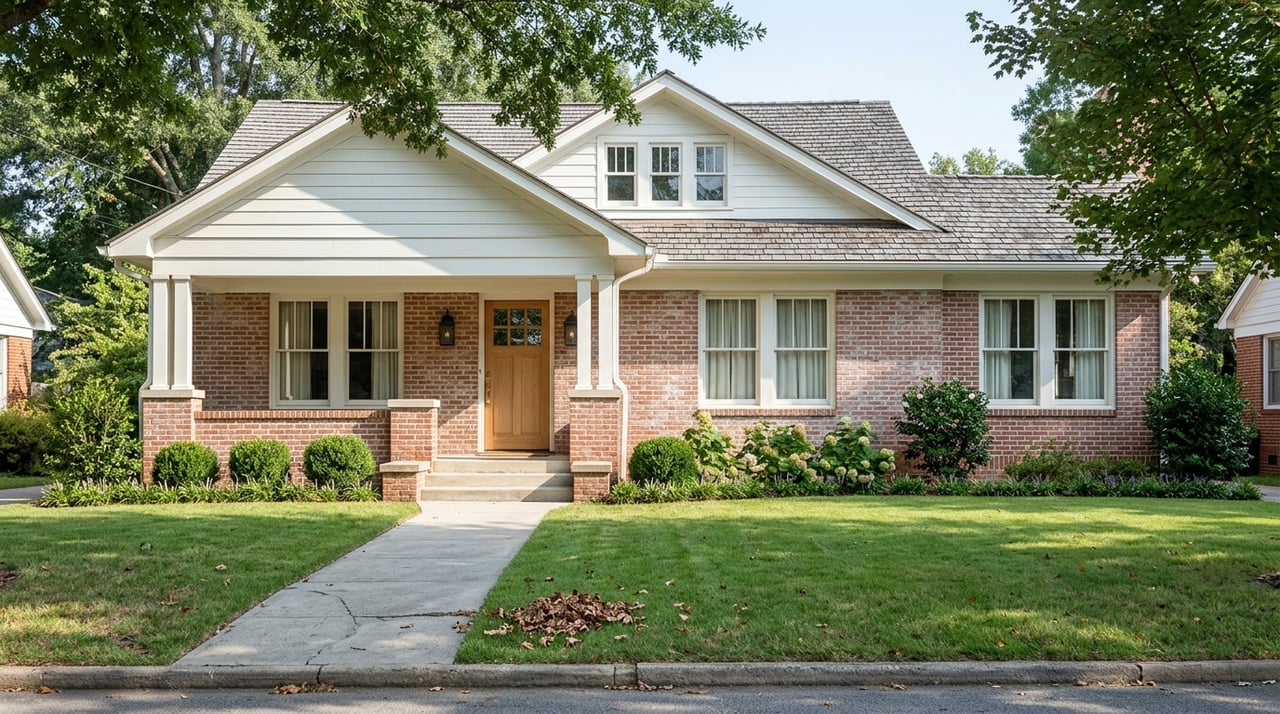
Style vocabulary also helps narrow your search. Craftsman and Prairie School homes often point to the earlier bungalow era, while Colonial Revival and Tudor Revival are the styles many buyers picture when they think of traditional historic character.
Sunset Hills adds another layer with Minimal Traditional and Ranch houses. That is important because in Greensboro, historic fabric includes not only pre-1930s homes but also later mid-century houses that contribute to a neighborhood’s documented character.
What to consider before buying an older home
Historic homes can be deeply rewarding to own, but they come with practical questions too. A little homework early can help you make a smart, confident decision.
Start with a thorough inspection
Older homes often have features and systems that need closer review. A thorough home inspection can help you identify major issues early in the process and better understand likely repair needs.
For buyers considering homes with age and character, inspection findings can be especially important when evaluating maintenance, updates, and future costs. This is one area where careful guidance can make a big difference.
Ask about lead-based paint
If a home was built before 1978, lead-based paint may be a concern. Federal law requires disclosure of known lead information before a sale or lease contract is signed for most pre-1978 housing.
That does not mean every older home is unsafe, but it does mean you should review disclosures carefully and ask questions when appropriate. The older the home, the more likely it is to contain lead-based paint.
Plan for energy-efficiency tradeoffs
Many older homes were built long before today’s efficiency standards. Older attics may have little or no insulation, and older or poorly installed windows and doors can leak air.
When you fall in love with original windows, plaster walls, or vintage floor plans, it helps to balance charm with realistic expectations about comfort and utility costs. Some buyers are happy to make that trade. Others want a home where efficiency upgrades are already in place.
Understand local design review
If the home is in a Greensboro local historic district or is separately designated as a landmark, exterior work and site work may require a Certificate of Appropriateness. The city’s design standards guide what changes may need review.
This is especially important if you already have renovation ideas in mind. A home in a local district may still be an excellent fit, but you will want to understand the review process before you buy.
Be careful with tax-credit assumptions
Historic designation does not automatically mean an owner-occupied home qualifies for a federal renovation tax credit. The federal 20% historic rehabilitation tax credit applies to income-producing buildings, not owner-occupied residences.
Some properties may qualify for other incentives, and Guilford County landmarks may qualify for up to a 50% property-tax deferral according to city materials. The key is not to assume every historic home purchase comes with the same benefits.
Choosing the right historic neighborhood for you
The best neighborhood depends on what you mean by historic. If you want the strongest local historic-district feel, Fisher Park is often the clearest match. If you are drawn to architect-designed homes and larger landscaped lots, Irving Park may rise to the top.
If you want the broadest mix of ages and styles, including later mid-century homes, Sunset Hills offers more range. Each neighborhood brings a different version of Greensboro’s historic character, and that is what makes this search so interesting.
When you are touring homes, look beyond finishes and square footage. Pay attention to the streetscape, the lot, the setting, and the kind of ownership experience you want. In historic neighborhoods, those details matter just as much as the floor plan.
If you are thinking about buying or selling in one of Greensboro’s historic neighborhoods, working with a local expert can help you compare options, spot important details, and move forward with confidence. Connect with Colleen Long for knowledgeable, hands-on guidance tailored to your goals.
FAQs
What does historic status mean for a home in Greensboro?
- In Greensboro, a home may be simply older and architecturally notable, located in a National Register district, or located in a local historic district with exterior review rules.
What is the difference between National Register and local historic districts in Greensboro?
- National Register listing by itself does not place restrictions on private property, while Greensboro local historic districts require a Certificate of Appropriateness for exterior changes and certain site work.
Which Greensboro neighborhood is best for strict historic character?
- Fisher Park is often the strongest fit for buyers who want a clear historic identity, older architectural styles, and local preservation oversight.
Which Greensboro neighborhood offers the widest range of historic home styles?
- Sunset Hills offers one of the broadest mixes, including Colonial Revival, Tudor Revival, Craftsman Bungalow, Minimal Traditional, and Ranch homes.
What should buyers check before purchasing an older Greensboro home?
- Buyers should pay close attention to the home inspection, lead-paint disclosures for most pre-1978 homes, energy-efficiency tradeoffs, and any local design-review requirements.
Do historic homes in Greensboro automatically qualify for tax credits?
- No. Owner-occupied homes should not be assumed to qualify for the federal 20% historic rehabilitation tax credit, which applies to income-producing buildings, though some other incentives or local landmark tax deferrals may apply.